
International Motorcycle Show - NYC 2011
By 2WheeltipsThe 2wheeltips crew made it over to the Javits Center in NYC last month to check out the International Motorcycle Show. This is our 3rd time going and we always have a good time talking to the vendors and catching up with the latest motorcycle industry gossip. This year was no exception. We had a great time talking to our friends from National Cycle, Arai helmets, Touch of Purple, West Virginia Tourism and a few others. It was a great show and we had a lot of fun. But we couldn't help but notice a few changes, most of them driven by the slow economy. These are:
Smaller
Show
As we all know, the "powersports industry" (motorcycles, UTV's,
ATV's, scooters, watercraft) has taken a serious hit due to the
declining economy. The NYC show is one of the largest and
over the years we have noticed a steady decline in the size of
the show. Five or six years ago, the show was "standing
room only", had hundreds of vendors and was on 2 levels.
Now the show is on one level and many of the exhibitors decided
not to participate or are no longer in business. To many, a
motorcycle is simply a luxury item they can no longer afford and
many people have put off purchasing a bike or they are selling
the one(s) they already have. We think the show numbers reflect
this new reality.
Smaller
Bikes
In prior years, most of the big manufacturers couldn't wait to
unveal the latest and greatest bike with bigger engines, more
features and even bigger price tags. How things have changed.
This year, the spotlight was on smaller bikes. The most memorable
were the Honda 250cc (you heard that right) sport bike, the
dressed up Honda Shadow (750cc) with Cobra accessories and the
Harley-Davidson (mid-priced) softtails. Since banks are not
handing out motorcycle loans like halloween candy anymore, the
manufacturers have caught on and are now making bikes that people
can get financed.
Scooters
We did not see ANY scooter manufacturers at the show nor did we
see any "green" vehicles. In previous years, there were at least
two at the show. This segment of the industry has taken a serious
hit and we personally know of a few scooter manufacturers that
are out of business. The only exception was the BMW, but it's a
concept scooter.....and is not available for sale.
New
Products
Although the industry is changing, we did see some new products
and vendors. SpeedpassingXV was there with a
new EZPass holder that straps you your arm. NikkoMotoRacing
introduced a new line of motorcycle helmets. BLINC introduced some
new integrated bluetooth helmets and
West Virginia Tourism gave an excellent presentation on
motorcycle rallies and events available in their
state.
As one of our friends from the industry stated, the industry is
getting back to basics and is now focusing on the motorcyclist
that has always been there. We will see how this goes in
2011.
Can-am Spyder Review
By 2WheeltipsOne of our long time fans, Nick, writes for the Motorcycle Sport Touring Association. Nick and I spoke over the weekend and he is kind enough to let us link to his product reviews on all the nice bikes he gets to test out. Here is a link to his latest review of the Can-am Spyder. Ya know....the 3-wheel thingy you see in all of the motorcyle magazines.
2007 Motorcycle Accident Statistics
By 2Wheeltipsby Gene Knutson
International Director, Rider Education
Deadly Motorcycle Accident Statistics
Take a look at the statistics below if you think riding without a motorcycle helmet is a good way to save money.
With the number of U.S. motorcyclist deaths jumping 78% to 5,154 in 2007 from 2,897 in 2000, a recent University of Southern California study points to the wearing of a helmet as the major factor in surviving a motorcycle crash.
Below are additional statistics that explain why motorcycle insurance premiums continue to rise.
Motorcycle Fatality Statistics:
Although motorcycles represent only 3% of all registered vehicles in the United States, motorcyclists accounted for 13% of total traffic fatalities in 2007. Per registered vehicle, the fatality rate for both motorcycle operators and passengers is 5.5 times higher than that for passenger car occupants. Per vehicle mile traveled, motorcyclists are about 35 times more likely to die in a car crash than people traveling in passenger cars.
These findings are among the most recent statistics released by the National Highway Traffic Safety Administration (NHTSA).
Deadly Motorcycle Crash Statistics:
During 2007, 50% of all fatal motorcycle crashes involved collisions with another type of motor vehicle in transport. Of these two-vehicle crashes, 78% of motorcycles involved were struck from the front. Only 5% were struck from the rear. In 25% of fatal motorcycle crashes, the motorcyclists crashed into a fixed object like a telephone pole or a concrete abutment. Speeding was a factor in 36% of fatal motorcycle crashes during 2007. This compares with 24% for passenger cars, 19% for light trucks and 8% for large trucks. Florida (530), California (495) and Texas (375) had the highest number of motorcycle fatalities in 2007.
Fewer Motorcyclists Wear Helmets:
The NHTSA estimates that helmets saved 1,784 motorcyclists from death in 2007. If all motorcyclists had worn helmets, an additional 800 lives could have been saved. Helmets are considered to be 37% effective in preventing fatal injuries to motorcyclists. This means for every 100 motorcyclists killed in crashes while not wearing a helmet, 37 of them could have been saved had all 100 worn helmets.
Sadly, use of motorcycle helmets in the U.S. has declined by 13 percentage points to 58% in 2007 from 71% in 2000.
Remember, in an accident your head is usually one of the first parts of your body to feel the impact. Why chance it, wear a helmet and continue to see the sunrise tomorrow.
Counter Steering
By GoldwingRonWhat was the first thing you thought of when you heard the words “counter steering”? I remember what ran through my mind; is that even possible? What a counter intuitive thing to try and figure out. You want me to go barreling down the highway and turn the bike by “counter steering?” So I did a little research into this mysterious technique and honestly, I got more confused with every article, explanation, and video. To my amazement I found that the ability to perform counter steering properly was pretty much written off as something that comes naturally. The general consensus was if you can ride a bicycle down a hill, then you already know how to do it.
I’m sorry, but that’s not going to fly, especially experiencing some close calls of my own and after speaking with a few newer riders, listening to their definition of counter steering and watching some of my friends lean their 800 pound cruisers through the turns. Even at the Motorcycle Safety Foundation classes, they preach that you should look, lean and roll on the throttle as you take the turns, but what does that mean?
As I gained my experiences riding, I found myself pushing the envelope a little more as time progressed by upping my speed in the turns and tried just leaning the bike more. I simply did this because that’s what all of my instructors had been telling me. But to just lean the bike didn’t improve my cornering ability; it just made the bike lean more in a wide arc that usually resulted in me having to slow down through the turn or worse, crossing the center line. For me, this was completely unacceptable. I needed to find out what I was doing wrong, I didn’t like making the same mistakes over and over, I wanted to improve my riding skills, and become a safer rider at the same time.
The answer came to me like a bolt of lightning during a practice session in a parking lot while trying to do some slow speed turns. I began forcing my bike to lean more by pushing hard on the grip down on the side I was trying to turn the bike. In other words, it was like I was trying to push the bike to the ground to get it to lean over. It takes a lot of time to master [this technique] and is part of the progression in Ride Like A Pro, but this was the answer I was looking for. It was the “lean” and the counter steer all in one. As I turned my bike in sharp turns, I was actually performing the equivalent of a counter steer and my bike was making sharp turns so tight I was surprising myself. The simplicity of making the bike do the work, without having to use the weight of my body to get the bike to roll and turn to the left and right was a huge find.
The proof came when I took the bike out and began riding through some nice curved roads. I slowed the bike to a comfortable entry speed and looked through the turn. I rolled on the throttle and pushed the bike under me without leaning my whole body with the bike by pressing down on the grip in the direction of the turn. I realized that I was extremely comfortable throughout the entire turn and looked for more situations to try out my new found technique. The beauty of my new find was that the curves and turns were less threatening to me. I was also surprised to discover that I seemed to have a lot more lean in reserve than before learning this, and the turns that would scare me before, were easy to navigate.
If you can, imagine yourself straddling a bicycle standing upright with your feet flat on the ground. Now picture yourself lightly pulling up on the left grip while pressing down on the right grip causing the bike to lean. The only difference between that and counter steering is that your press is down and forward in the direction of the turn. The harder you press, the tighter you will turn. One thing to keep in mind is that while performing these techniques, keep your muscles nice and loose, as it enables you to perform them so much more smoothly because remember, “Smooth = Cool”. A death grip on the handlebars will do nothing but impair your ability to react quickly and fatigue you a lot faster than normal. You want to keep your eyes level with the horizon (tilt your head to do this), which is one reason why simply leaning your body doesn’t work so well because it’s nearly impossible to keep your eyes level with the roadway while leaned all the way over. I found that trying to keep my spine perpendicular with the road surface or my shoulders parallel allows me to work the bike beneath me, again, allowing the bike to do the work.
Once you have found what works for you with counter steering, you’ll find that you are less fatigued when riding the windy roads, and even lane changes become easier. You can snap your bike to different lines and avoid obstacles that much more efficiently. Learning to counter steer correctly makes riding much more enjoyable. It will also improve your ability to ride safely. I hope this answers the question of what counter steering really is. So get out there and work on your counter steering.
Tire Age Matters!!
By 2Wheeltips
Here is something many
riders don't know about. The age of your motorcycle tires is just
as important as the depth of the tread.
Why? Because motorcycle tire rubber is soft....much softer than
the rubber in your car tires. And it has to be....soft rubber
grips the road very well and lets you ride those twisty roads
with confidence. It is also why motorcycle tires wear much faster
than car tires.
Because they are softer, they will dry out and crack as they get
old. Once this happens it doesn't matter if it is a brand new
tire or one with a few hundred miles, it is dangerous to use
because old motorcycle tires are slippery. They have less grip
and increased braking distance which could get you into a
crash.

If you ride 2000 miles a year (the estimated average for bikers
in the U.S.) or more, you will wear your tires out before they
"age" out. If all you do is ride to the local bike night and back
a few times a month, you will have hard cracked tires with plenty
of tread.
How do you tell the age of the tire? That's simple. It is right
on the sidewall....but it is encoded.
The first 2 numbers are the week of the year the tire was made
and the last 2 numbers are the year. So this tire was made
the 13th week of 2004.....sometime around the 1st week of April
2004.

Knowing the tire age has a few uses:
Buying used
bikes
When buying a used bike, you definitely want to check the tire
age. If the tires are over 5 years old, use the tire age to
negotiate a better price. You will need to replace those tires
soon.
Dealers with
leftover bikes
Due to the economy, many motorcycle dealers have brand new 2007 -
2009 bikes.......with old tires. Even brand new bikes have tires
that are at least 1 year old on them. So a "new"
2007
bike could have tires
made in 2005. Here is a chance for you to ask for a price break
or have the dealer put newer tires on the bike as part of the
deal.
Websites that
sell discount tires
Why do you think some websites (I won't name any here) sell
motorcycle tires for 65% - 75% off? Because they are old. Some of
them have been sitting around in storage for 6 or 7 years. If you
order from a discount tire website, let them know up front you
will not accept any tires that are over 18 months
old. If they ship them
anyway, refuse the order.
I hope this helps.
"I Read the News Today, Oh Boy....."
By Carol"1 Dead After Crash on Route 18 in East Brunswick"
http://www.mycentraljersey.com/article/20100712/NEWS/100712019/1004/NEWS0102
Somehow, without the headline saying it, I knew a motorcycle was involved. Sadly, I was correct. Sadder yet, the motorcyclist died in the accident; the passenger on the bike was taken to the hospital and was in stable condition at the time. Apparently, the 19 year old driver of the automobile that was involved was not injured.
I know nothing about this accident (other than what little was written up in the local paper) and I know none of the people involved. But motorcycle accidents send chills down my spine whenever they occur, and especially when they occur on local roads that I travel all the time. Perhaps many of you will agree with me when I say that it seems like we are often a bit too interested in the gory details of motor vehicle accidents. Yet, hopefully, we can learn something from even the most tragic of accidents. I looked at the photos that were taken of the accident (and there was controversy about the newspaper even posting some of them, especially the ones that show what appears to be covering over the body of the biker) in an attempt to understand better what had happened and I am baffled. Was the biker making a right turn onto Route 18 from the side street? Did the vehicles collide while merging into the same lane? Was someone driving under the influence of alcohol or drugs? Was one of the operators distracted? I don't have an answer. What I do know is that, regardless of the roads that we ride on, the moment we let down our guard is the moment that we will be in big trouble. Defensive motorcycling is necessary on all roads at all times....because our lives depend upon it.
Take a look at the photos after this accident to see if you can learn anything from them:


And, for those of you who might live in my area, and who just might have been witness to what happened on Sunday evening, this is what I found on the road today:


Americade 2010 - Now For Something a Little Different!
By Carol
This year, we didn't sign up for any of the scheduled tours, though, so we were pretty flexible when it came to what to do, where to go, and whether to brave the weather! We clocked out a route from Lake George for a Thursday trip with some friends of ours. Of course, Thursday morning arrived and guess what? Yep...it was raining again. So we canceled our plans for the day trip and tried to figure out what else we could do in the cool, wet weather. Of course, going to a motorcycle rally, we wanted to get on our bikes and ride, not wander around the village of Lake George. So, when the clouds cleared a bit, we decided to give it a go and we hopped on our bikes and headed north. We rode up the western side of Lake George, on Route 9N, a very curvy, twisty and scenic road that snakes its way north. Lake George comes to an end and Lake Champlain begins and we continued north until we got to Fort Ticonderoga, where there is a ferry (really just a little barge) that carries people, cars, and bikes across Lake Champlain between New York and Vermont. Once in Vermont, we took a few more roads and before we knew it, we were at our destination: the Woodchuck Cidery in Woodbury, Vermont.

Well, my friends, this is not your regular ol' cider mill. These people make HARD cider! Normally, the cidery is not open to visitors for tours but they made an exception for us, and in we went.

We were given a brief overview of the cidery and, although we weren't given any samples of the ciders they produce, they did send us away with tee shirts and cider glasses (on one side of the glass you get the proper measurement of Woodchuck draft cider and lager for a "snakebite" or turn the glass to the other side to get the measurements of Woodchuck draft cider and stout for the perfect "black velvet". Sounds yummy!)
Our next stop was the Otter Creek brewery, a stone's throw from Woodchuck. We walked in and were greeted by some really friendly people who offered us samples of the ales that they brew!

We were given a few sips of a bunch of varieties and then off we went for a tour of their facility. It was fascinating to learn a little about how they brew their ales. We stood over some mightily large vessels that were used in the storage and fermentation processes. Then, we watched as the different ales were bottled and packaged.

Of course, we had to find out who, in our area, sells their products since there were several that were delicious enough to want to buy!
With our curiosity (and a teeny bit of our thirst) satisfied, we headed out to our bikes to continue our day trip. And, of course, with such unpredictable weather, wouldn't you know it? It was POURING! Thank goodness for rain suits, waterproof boots, full face helmets, good tires and dependable bikes!! We had a couple of other places on our list to visit but, due to the torrential downpour, we decided to just go grab some lunch and head back to Lake George.
One of the people at Otter Creek recommended a restaurant in downtown Middlebury, called "Two Brothers."

It was a GREAT place for lunch and it gave us enough time to dry out before heading out into the rain again. After lunch, although the rain had let up a bit, we decided to just head back to Lake George Village. I kept looking in front of us and behind us to keep track of potential rain clouds. On the ferry back to New York, I turned around and saw some clouds that looked like they were following us!

Of course, at that point, what difference did it make? I mean, we were dry INSIDE our riding gear….the outside of us was completely drenched.
So, if you ever venture up to Americade, keep in mind that you are not limited to just the standard tours listed in the Americade brochure. If you do a little research before your trip, you will find that there are lots of places that you can visit in the region. And, DO keep in mind that, the first full week of June, when Americade is held, is a very unpredictable time, weatherise. You should be prepared for cold, heat, sun, rain, and even (yikes!) the possibility of snow!!
A Tragedy That Could Easily Have Been Prevented
By CarolSo what is the reality here? One biker dead, one biker in critical condition fighting for his life, and the biker who caused it all survives with minor bruises and a certain jail sentence and who knows how many lawsuits to plague him for the rest of his life. All because he was stupid enough to ride drunk.
Who's On First?...I Mean....Who's Up Front????
By Carol
Well, I just sat there, enjoying my breakfast, sipping my coffee…waiting to see who the owner of the Goldwing/Sidecar was. Along came a couple in their riding gear….heading right for that bike. And I watched, in amazement….as the woman took the helm of the bike and the man sat in the passenger seat!

One Titted Babe, Shark Attacks and Other Motorcycle Statistics
By Dino DoganThe "science" of statistics is one fickle bitch that cant be trusted. Not to mention the fact that all statistical analysis dispose of outliers. The mins and the max'.
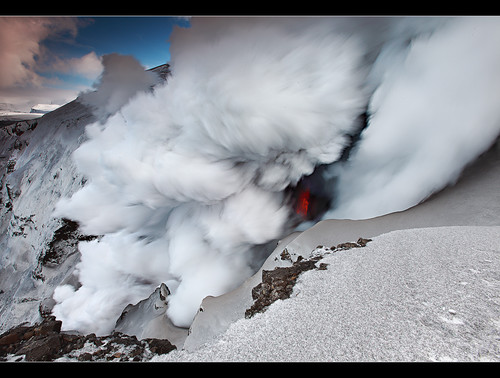
Back in the real world, we are overflowing with outliers. 9/11 was an outlier. Bill Gates is an outlier. Volcanic eruption in Iceland is an outlier. I guess what I'm saying is that in the real world, there is that one in a million that statistics cant (or doesn't want to?) account for which makes all the difference.
So is the case with shark attacks.

Oft cited statistics regarding sharks is that sharks attack in shallow waters. Really? Attack who?
The studies are made by people and so these studies are people centric. Sharks, according to statistical data, will most commonly attack in 3 ft of water. Now that you know this, you can finally take that swimming route to the other coast via the Atlantic.
How many people can a shark find 100 miles away from the shore? Or for that matter, 1 mile away from the shore?
People scarcity outside the shallows makes it hard for a shark to attack if there is nothing to attack. Er go, statistical data would have you believe that you are perfectly safe from shark attacks in case you find your self stranded in the middle of the ocean. Statistically speaking of course.
Another piece of statistical data is that most motorcycle accidents occur within a 12 mile radius of your home. Really?

Could this be another example of the shark tricking the statistician? I think so.
Every time you get on your motorcycle you will pass through the 12 mile radius of your house. The routes beyond that 12 mile point are likely to be different (or at least not consistent), er go, you will spend more time (statistically speaking) within the 12 mile radius than any one spot outside it. Do you think this will skew the results? Most definitely.
Moral of the story? Be careful. Both within the 12 mile radius and beyond and don't believe all the math all the time.
Dino Out


