
Latest News
 Top Holiday Picks for Last Minute Shoppers
If you're like me, holiday shopping doesn't start until December 15. Every year I try to be more creative than the last, but frankly my creativity can run a little dry when I'm running around the last few weeks of December.
To help my fellow procrastinators, I've put together some ideas for your last-minute gifts.
Harley Davidson Stainless Steel Watch - For the Harley owner in your life, the face on this stainless steel watch looks like an odometer and features the Harley-Davidson logo in the center. Simple, masculine, and classy.
Honda Racing Fleece Pullover - This fleece pullover is officially licensed by Honda and features zip pockets and cool art on the upper right sleeve.
Ducks Unlimited Fender Pack - ATV owners can strap this camouflage fender pack to their vehicle. There are two great things about this gift - first, it has two large compartments and an extra slot to fit a water bottle. Second, proceeds go to Ducks Unlimited's wetlands conversation efforts. Double the goodness in one gift.
Baby Body Teamrider - Do you have a future racer in your family? This onesie track suit is pretty sweet and can fit 9-month and 18-month babies. Parents will be able to spot their baby in the bright orange jumpsuit as they scoot around the house.
To see more gift ideas, visit CycleTrader's Motorcycle Parts and Accessories section. Happy Holidays!
To help my fellow procrastinators, I've put together some ideas for your last-minute gifts.
Harley Davidson Stainless Steel Watch - For the Harley owner in your life, the face on this stainless steel watch looks like an odometer and features the Harley-Davidson logo in the center. Simple, masculine, and classy.
Honda Racing Fleece Pullover - This fleece pullover is officially licensed by Honda and features zip pockets and cool art on the upper right sleeve.
Ducks Unlimited Fender Pack - ATV owners can strap this camouflage fender pack to their vehicle. There are two great things about this gift - first, it has two large compartments and an extra slot to fit a water bottle. Second, proceeds go to Ducks Unlimited's wetlands conversation efforts. Double the goodness in one gift.
Baby Body Teamrider - Do you have a future racer in your family? This onesie track suit is pretty sweet and can fit 9-month and 18-month babies. Parents will be able to spot their baby in the bright orange jumpsuit as they scoot around the house.
To see more gift ideas, visit CycleTrader's Motorcycle Parts and Accessories section. Happy Holidays!
How to Buy the Best Motorcycle Gear by Kevin Domino

Good riding gear will offer comfortable protection from the elements without compromising the benefits you get from riding— the sights, the feelings, the smells, and the sounds.
Cars protect the occupants of the vehicle from the elements and other vehicles that motorcycles don’t have; windows, bumpers, air bags, and steel side-impact structures. Motorcyclists protect themselves with what they wear.
Beyond weather protection, you need gear because cars prey on motorcycles and they are out to get us. Car drivers are insulated and distracted from the activity of actually driving their cars by so cell phones, texting and so on. The bottom line: assume every single vehicle on the road is out to get you, and you’ll be right.
Gear Versus Clothes
Motorcyclists need protection from weather, abrasion, impact, invisibility, and bad music. Properly designed riding gear can protect you from the first four. Sun, wind, rain and extreme temperatures are the elements requiring consideration. We’ll need to weigh abrasion protection in your decision, because sliding body parts rapidly along an asphalt or cement surface is an excellent way to remove skin and flesh (which presumably you want to avoid). We all understand the need limit the damage from bouncing against, and getting hit by, stuff.
It’s easy to fall into the trap of choosing riding gear like we choose street clothes. But motorcycle gear is more like the gear worn by fighter pilots or fire fighters; protection should be the first criterion.
Plan to Upgrade
All professionals equip themselves with the latest and best gear available. Professional motorcyclists, too, use the best protective gear available. But your typical riding environment is much different than professional racers—it’s worse! If you consider yourself a serious rider, keep in touch with advances in riding and plan to upgrade your gear, when something measurably better comes along.
Here are the 6+1 motorcycle riding gear essentials.
1) Helmet
A good-fitting, well-designed, DOT or Snell-approved helmet is a great riding companion. Besides the obvious help a helmet provides if you attempt to dribble your melon on the tarmac, it keeps your head dry when it rains, warm when it’s cold, quiet in a 70-mph wind, and even keeps you cooler on hot days by controlling the rate of evaporation. The helmet also protects you from bugs and sand that go “splat” and “ping” on a helmet at 70 mph but could leave a scar on a bare forehead.

2) Jacket(s)
Regardless of the jacket you wear, make sure it has protective armor on the shoulders, elbows, and back. The jacket also needs to be comfortable, but fit tight enough so armor stays put in case of a get off. The armor in your jacket should be designed similarly to a helmet, with a hard outside shell and a shock-absorbing inside, and closed-cell foam that’s soft and pliable when moved slowly but that stiffens right up and provides protection when whacked hard. An alternative to built-in armor is armored underwear that is worn under less-protective jackets (and pants and jeans), if you need to look a certain way while riding.
Choose bright colors with high conspicuity to ensure you’re seen by other traffic. Reflective strips incorporated into the design of the jacket will help. Especially if you ride in high-traffic areas, such as when commuting on your motorcycle, you can take a tip from road workers and wear a hi-viz green vest with reflective strips over the top of any jacket. These vests are relatively inexpensive and easy to stow.
For protection from rain, you’ve got two choices. You can choose to wear a dedicated rain suit over your riding gear. Or you can chose waterproof riding gear that incorporates a breathable inner fabric like Gore-Tex. The disadvantage of integrated gear is that it is typically more expensive than a rain suit. The advantage of waterproof riding gear is that you don’t need to stow, and then stop and change into, a rain suit when it begins to rain.

3) Pants
Pants have the same considerations as jackets—protection from the elements, abrasion resistance, and impact protection—with the additional issue of being comfortable enough in the “seat area” so as not be a pain in the “seat area.”

4) Boots
Leather boots with a minimum 8 inches of height are required by professional racing organizations, and that seems to be a good standard to use for all types of motorcycle riding. Look for impact padding or armor on the inside and outside of the ankle as well. If you will be riding in the rain, get boots that are waterproof and keep them treated to maintain their water-repelling properties.

5) Gloves
It’s easy to take the functioning of our hands for granted, because they are used in just about everything we do. As important as your hands are, the parts and materials of which they are made are easily damaged. You’ll need a variety of gloves to protect your hands for different riding conditions.


7) Windshield
Although a windshield isn’t riding gear, it is an accessory that provides some of the same functions as riding gear such as shielding you from the wind (and wind noise), rain, bugs, and the occasional unlucky or slow bird. And just like riding gear, it’s rare to find one that is right for every size and shape of rider.
There are a wide range of manufacturers and models from which to choose, from small handlebar-mounted screens to large shields integrated into frame-mounted fairings.

ATTGAT
A phrase used by some veteran motorcyclists is ATGATT, which is an acronym that stands for “All The Gear, All The Time.” Even the best gear won’t protect you if it’s at home in the closet. Even if you are going on a short ride, even just to the store, you should put on your protective riding gear.
Because of factors beyond anyone’s control, if you ride long enough, you will need the extra protection of specialized riding gear. No one plans to have an accident, of course, but they happen to even the best riders. Like all aspects of motorcycling, keeping your balance is important. We’re all bound by the same laws of physics and probability. Keep your arrogance and vanity in check, and suit up. Riding is risky enough without tempting fate by riding “naked.”
** The preceding is excerpted from the book, The Perfect Motorcycle: How to Choose, Find and Buy the Perfect New or Used Bike. The information provided here will give you a framework to guide your motorcycle inspections and purchases. Space limitations preclude an in-depth discussion of the subject. You can find out about the book at www.theperfectmotorcycle.com. There are also 18 checklists and worksheets available for download at www.theperfectmotorcycle.com/download-worksheets-and-che.html that you can use to supplement the information in the book.

Getting Ready to Sell Your Motorcycle
For some, it can be heart-wrenching to even think about selling your motorcycle. For others, the extra cash can help finance their next motorcycle or another large purchase. CycleTrader helps thousands of people sell their motorcycle every year, so we’ve seen our share of successful sales. Here are a few tips to help you get started:
• Research what other motorcycles are selling for in your area – Do a search on CycleTrader.com for similar makes, models or types so you can see the market rate. Other resources like NADA or KBB can also help you price your motorcycle according to its condition, year and mileage.
• Take good photos and videos (and don’t have a model, your child or your dog posing on or near the motorcycle) – You don’t have to be a professional photographer to take a great shot. Use a good point-and-shoot or a digital SLR if you’re more advanced to take an unobstructed picture of your motorcycle. One of my favorites set of pictures is a ’05 BMW F 650GS from Carrollton, TX.

• Promote Your Listing on Facebook and Twitter – Once you’ve uploaded your motorcycle onto CycleTrader.com, tell your social networks all about it by posting a link to your listing. Use a service like TinyURL, Bit.ly or Owl.ly to help you shrink your links if they take up more than 140 characters on Twitter.
 • Organize Your Paperwork – Have the title available and prepare a bill of sale before meeting with the seller. If you don’t have a bill of sale template, visit your state’s DMV for more information. The California DMV has a detailed template available on their site, with form fields to input your information and the seller’s information.
When you're ready to sell, CycleTrader has more tips and tricks to help you list your motorcycle effectively. Visit our Sellers' Resource Center for more information.
• Research what other motorcycles are selling for in your area – Do a search on CycleTrader.com for similar makes, models or types so you can see the market rate. Other resources like NADA or KBB can also help you price your motorcycle according to its condition, year and mileage.
• Take good photos and videos (and don’t have a model, your child or your dog posing on or near the motorcycle) – You don’t have to be a professional photographer to take a great shot. Use a good point-and-shoot or a digital SLR if you’re more advanced to take an unobstructed picture of your motorcycle. One of my favorites set of pictures is a ’05 BMW F 650GS from Carrollton, TX.
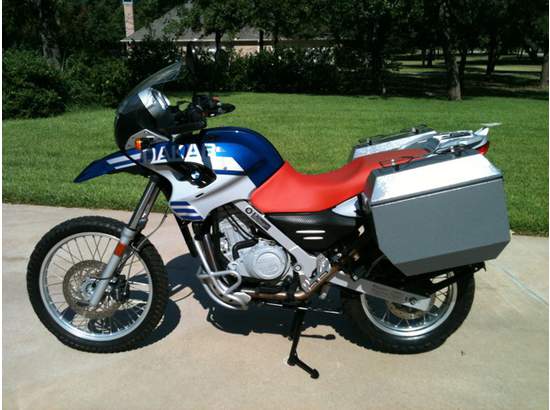
• Promote Your Listing on Facebook and Twitter – Once you’ve uploaded your motorcycle onto CycleTrader.com, tell your social networks all about it by posting a link to your listing. Use a service like TinyURL, Bit.ly or Owl.ly to help you shrink your links if they take up more than 140 characters on Twitter.

When you're ready to sell, CycleTrader has more tips and tricks to help you list your motorcycle effectively. Visit our Sellers' Resource Center for more information.
Choosing the Right Helmet to Fit Your Noggin
Last month the National Transportation Board urged states to require federally approved helmets. Only 21 jurisdictions mandate that all riders - adults and children - wear helmets, while 27 states only require passengers and children to wear protective head gear.
Wherever you ride, make sure you read up on your state's helmet laws. When you're ready to select a helmet for you or your riding companion, check out a few tips to help it fit just right:
1. Make sure the helmet isn't too big: When you shake your head or pull up on the helmet, does your head go with it or does it come loose? This is a sign of an ill-fitting helmet, which could cause an uncomfortable or even dangerous riding experience.
2. Make sure the helmet isn't too small: This fit-test should be somewhat obvious since you probably can't even squeeze your head into the helmet.
3. Select a federally approved helmet: Check for the DOT-compliant sticker marked on the back of the helmet with the label DOT FMVSS 218.
Make sure you find the one that fits right versus finding a flashy helmet that won't protect your cranium. Safe riding!
Wherever you ride, make sure you read up on your state's helmet laws. When you're ready to select a helmet for you or your riding companion, check out a few tips to help it fit just right:
1. Make sure the helmet isn't too big: When you shake your head or pull up on the helmet, does your head go with it or does it come loose? This is a sign of an ill-fitting helmet, which could cause an uncomfortable or even dangerous riding experience.
2. Make sure the helmet isn't too small: This fit-test should be somewhat obvious since you probably can't even squeeze your head into the helmet.
3. Select a federally approved helmet: Check for the DOT-compliant sticker marked on the back of the helmet with the label DOT FMVSS 218.
Make sure you find the one that fits right versus finding a flashy helmet that won't protect your cranium. Safe riding!
2010 Seattle Motorcycle Show
In less than 24 hours (not that we're counting), we'll be at the Progressive International Motorcycle Show in Seattle. We hope to see you at booth 684 where we'll be joined by our friends at Renton Motorcycles. While we count down to the start of the show, here are a few things I'm excited to see:
1. Jason Britton and Eric Hoenshell - Jason and Eric will be putting on several heart-pounding shows. Check out one of his shows at Fox Studios here (Copyright: Burbank Pictures):
2. Meet MotoAdventureGal - Alisa Clickenger, aka MotoAdventureGal, returns from her trip to South America and will be speaking to other female riders. The Women Riders booth will be open all weekend to answer your questions, help you try on gear, and sit on bikes.
3. Ultimate Builder Custom Bike Contest - I'm ready to ogle what these custom bike builders are bringing to Seattle. There's no celebrity panel to judge these bikes - winners will be selected by the audience, so make sure you vote for your favorite.
4. The Marketplace - I'm wearing comfortable shoes because I will be stopping by every booth to see new motorcycles, parts and accessories. Who needs exercise when you can walk around the Qwest Center a few times?
Bundle up, bring your camera and get ready for this weekend's show. We'll see you there.
1. Jason Britton and Eric Hoenshell - Jason and Eric will be putting on several heart-pounding shows. Check out one of his shows at Fox Studios here (Copyright: Burbank Pictures):
2. Meet MotoAdventureGal - Alisa Clickenger, aka MotoAdventureGal, returns from her trip to South America and will be speaking to other female riders. The Women Riders booth will be open all weekend to answer your questions, help you try on gear, and sit on bikes.
3. Ultimate Builder Custom Bike Contest - I'm ready to ogle what these custom bike builders are bringing to Seattle. There's no celebrity panel to judge these bikes - winners will be selected by the audience, so make sure you vote for your favorite.
4. The Marketplace - I'm wearing comfortable shoes because I will be stopping by every booth to see new motorcycles, parts and accessories. Who needs exercise when you can walk around the Qwest Center a few times?
Bundle up, bring your camera and get ready for this weekend's show. We'll see you there.
Improved Toolbar to Search Motorcycles
Earlier this fall CycleTrader.com introduced a new refine toolbar that made it easier for you to filter through our 150,000+ listings. (Check out an example of the toolbar with a search for Harley-Davidson motorcycles).
We opened up the lines of communication and many of you have told us what you'd like to see more of and what you'd like to change. Our team put their nose to the grindstone and started working on your suggestions. Here are just a few things we baked into our most recent updates:
* Filter by Dealers vs. Private Sellers - We introduced this feature in the fall, but it was buried at the bottom of the navigation. We've moved it up so it's hard to miss.
 * Price and Year Filters - Everyone's got their own way of searching for a particular price or year range, so we gave you two choices. Select between fixed price and year ranges like "Under $5,000" with a set of links, or customize your search with our drop-down menus.

* Homepage Quick Search - Our homepage quick search allows you to easily select a year range, but the drop-down menu was sorted by oldest to newest years. Definitely a no-brainer for us to change, and it's a great feature for you.

So if you're in the market to buy or just want to dream, test drive our changes. We always like hearing from you, and you can drop us a line anytime at [email protected].
We opened up the lines of communication and many of you have told us what you'd like to see more of and what you'd like to change. Our team put their nose to the grindstone and started working on your suggestions. Here are just a few things we baked into our most recent updates:
* Filter by Dealers vs. Private Sellers - We introduced this feature in the fall, but it was buried at the bottom of the navigation. We've moved it up so it's hard to miss.


* Homepage Quick Search - Our homepage quick search allows you to easily select a year range, but the drop-down menu was sorted by oldest to newest years. Definitely a no-brainer for us to change, and it's a great feature for you.

So if you're in the market to buy or just want to dream, test drive our changes. We always like hearing from you, and you can drop us a line anytime at [email protected].
Ask Kevin - A Gift That Can't be Wrapped
One of our readers is chock-full of holiday spirit and has her eye on a gift that's too big to wrap.
Dear Kevin,
My husband has been looking at motorcycles all year, and he’s narrowed it down to the 2010 Kawasaki Vulcan 900 Classic. He test rode it, and he says it’s perfect for him. Do you think it’s a good idea to go the dealership and surprise him with a motorcycle for Christmas?
Thanks!
Dear Reader,
Wow! That you're considering such a thoughtful gift is unusual in most marriages. I know there are some envious readers out there. I'd like to respond in two parts -- the relationship answer and the buying advice answer.
The relationship answer: If your husband likes surprises, and is OK with not discussing a decision that is a large part of the family budget, then a motorcycle would be a great Christmas gift.
The buying advice answer: This is a great time of year to buy a motorcycle. One of the critical phases of getting the perfect motorcycle has been completed by your husband by choosing the style and model of bike. Your job in the next phase is to get a great deal.
I recommend that you find multiple dealers with the same bike available, and check around to see who can give you the best "out the door" price. The "out the door" price is the total cost including all prep, license, delivery, taxes, etc -- the total amount you will pay. This way you are comparing apples to apples. Also, make sure that the dealer you choose knows that this motorcycle is a gift, and talk about your ability to, and the potential charge for, return or exchange if your husband would like a different color, for instance.
If you are financing the motorcycle, use the Motorcycle Loan Shopping Form at www.theperfectmotorcycle.com/download-worksheets-and-che.html to get the best deal on that aspect of the purchase. There are other helpful worksheets at the website to help your shopping efforts as well.
Finally, you should probably get your "honey do" list up-to-date, because you will have a very attentive and productive husband -- at least until riding season starts.
- Kevin


Dear Kevin,
My husband has been looking at motorcycles all year, and he’s narrowed it down to the 2010 Kawasaki Vulcan 900 Classic. He test rode it, and he says it’s perfect for him. Do you think it’s a good idea to go the dealership and surprise him with a motorcycle for Christmas?
Thanks!
Dear Reader,
Wow! That you're considering such a thoughtful gift is unusual in most marriages. I know there are some envious readers out there. I'd like to respond in two parts -- the relationship answer and the buying advice answer.
The relationship answer: If your husband likes surprises, and is OK with not discussing a decision that is a large part of the family budget, then a motorcycle would be a great Christmas gift.
The buying advice answer: This is a great time of year to buy a motorcycle. One of the critical phases of getting the perfect motorcycle has been completed by your husband by choosing the style and model of bike. Your job in the next phase is to get a great deal.
I recommend that you find multiple dealers with the same bike available, and check around to see who can give you the best "out the door" price. The "out the door" price is the total cost including all prep, license, delivery, taxes, etc -- the total amount you will pay. This way you are comparing apples to apples. Also, make sure that the dealer you choose knows that this motorcycle is a gift, and talk about your ability to, and the potential charge for, return or exchange if your husband would like a different color, for instance.
If you are financing the motorcycle, use the Motorcycle Loan Shopping Form at www.theperfectmotorcycle.com/download-worksheets-and-che.html to get the best deal on that aspect of the purchase. There are other helpful worksheets at the website to help your shopping efforts as well.
Finally, you should probably get your "honey do" list up-to-date, because you will have a very attentive and productive husband -- at least until riding season starts.
- Kevin
Be Your Own Santa This Year
Treating Yourself to a Motorcycle During the Holiday Season: Budget, Insurance and Financing Tips - By Kevin Domino
December is the best time of year to buy a motorcycle. The riding season for most of the US is closing down and most other buyers are distracted by the holidays and other winter activities. A high supply of bikes and low demand drive prices down.
Armed with worksheets available at the book’s website (or better yet, the book itself), you’ll make this a winter to remember.
The best buys from dealers are available now, before the dealer has evaluated inventory, balanced it with wholesalers, put in his order for the newly released models and set his bets on the next year.
Great deals from individual sellers are also available in December. The most common reason individuals are selling their bikes now rather than waiting for spring is because they need the cash, which puts you in a better position to negotiate.
Let’s put the pieces together to get you a new bike.
Your Budget
In October’s post, Uncover the True Cost of Ownership, we discussed the various factors that influence the costs between types of motorcycles. The decision to buy new or used is the first one you’ll need to make before shopping. If you decide to buy a used bike, check out September’s column, Inspecting Used Motorcycles – Ensuring You Get One in Great Condition, for some helpful advice and tools.
To evaluate motorcycle prices, there are multiple resources listed in the appendix (see below). One of the most popular pricing resources is The Kelly Blue Book. The Blue Book provides online trade-in and suggested retail pricing for motorcycles at no charge. Trade-in value is what you could expect to receive from a dealer if you applied your used motorcycle in trade on a new one. Suggested retail is representative of dealers’ asking prices for an excellent used unit.
The book’s appendix listing the resources, as well as worksheets and checklists for TCO, used motorcycle inspection, and more are available at www.theperfectmotorcycle.com/download-worksheets-and-che.html.
Commuter?
Justifying the cost of a motorcycle might be as simple as considering using it as a commuter. Using the worksheets available at www.theperfectmotorcycle.com, you can determine for the true cost of your motorcycle including maintenance, gear and fuel. The worksheets allow you to calculate how much money you will save commuting on a bike versus driving your car (and if you drive a truck or SUV, those savings can be dramatic).
Second Bike
If you already have a motorcycle, consider getting a second bike. There are many good reasons for owning two (or more) motorcycles. If you take this option, total cost of ownership will not double as you might expect. This is because some insurance companies give special multi-bike discounts that do not cost much more than insuring one bike—primarily because you can only ride one at a time. Also, you don’t need two garages, two sets of tools, two sets of riding gear, or double the training. Maintenance and repair costs do not double because your overall mileage for the two bikes will presumably remain the same as if you had bought a single bike.
Other Cost Savings
You can save as much of more on insurance and financing as you can on the motorcycle itself. Regardless of where you shop for a loan or insurance, do not be afraid to ask questions. Loans and insurance are simply other type of products—expensive ones, at that. An excellent resource for shopping for insurance and financing is Cycle Trader’s Research tab of its website at http://www.cycletrader.com/research/.
Insurance
Insurance coverage is no place to skimp. There is too much at stake. No one ever regrets getting too much insurance coverage when they’ve had an accident. However, coverage and cost for premiums are two different things. You can get the same coverage from different companies for different prices. When getting multiple quotes, make sure you are comparing coverage, replacement costs and any overlap with your existing health insurance.
Be sure to ask each provider before making your decision about potential discounts for:
• Completion of an approved rider-training course
• Using a DOT and/or Snell-certified helmet
• Approved theft-deterrent like alarms or Lo-jack
• Multiple vehicles or other types of insurance (life, homeowners, etc.)
• More than one motorcycle insured by the same provider
• Membership in the American Motorcyclist Association (AMA),
American Automobile Association (AAA) or the American
Association of Retired Persons (AARP)
• Installation of an approved security system
Also, ask the company to be considered for their “top-tier” rates, which are their highest discounted rates.
Financing Tips
You should have a good idea of all the expenses that go into buying your motorcycle from the total cost of ownership worksheet found at www.theperfectmotorcycle.com. There are many good free resources to help you with financial matters. For general information on personal finance and consumer rights see the book’s appendix.
Cash is the ideal way to pay for your motorcycle. If you don’t have enough savings for your next bike, installment loans from banks and credit unions are available.
Regardless of where you shop for a loan, some questions to consider are:
• How much will I pay in total in addition to the borrowed amount for the whole term of the loan?
• Can the interest rate change during the loan term?
• What happens if I’m late on a payment or two?
• What are the penalties for early payoff?
Factory and Dealer Financing
Some dealers and manufacturers offer financing. Only borrow money for a bike with an installment loan, and not with revolving credit. If you are considering factory or dealer financing, make sure you know which type they are offering. If you buy a motorcycle with revolving credit, you’ll end up paying too much. A revolving credit line works like a credit card, where you can borrow up to an amount of a credit limit and as you pay down the principal, you can borrow again against the line of credit. Besides the temptation to keep borrowing money for other things against the line of credit (and keep paying interest), the main reason you shouldn’t but a bike this way is that the interest can change before you pay off the loan.
Worksheets for evaluating insurance and financing costs are available at www.theperfectmotorcycle.com/download-worksheets-and-che.html.
Go Get ‘em
Your perfect motorcycle is out there, and at the best prices of the year. Armed with the worksheets (or even better, the book itself), you’ll make this the best winter yet. Please post comments here with the results of your shopping success.
The following is based on material in the book, The Perfect Motorcycle: How to Choose, Find and Buy the Perfect New or Used Bike (www.theperfectmotorcycle.com).

